Published July 6, 2026
Updated July 6, 2026 | 8 min read
Primary Keyword: paperboard converter

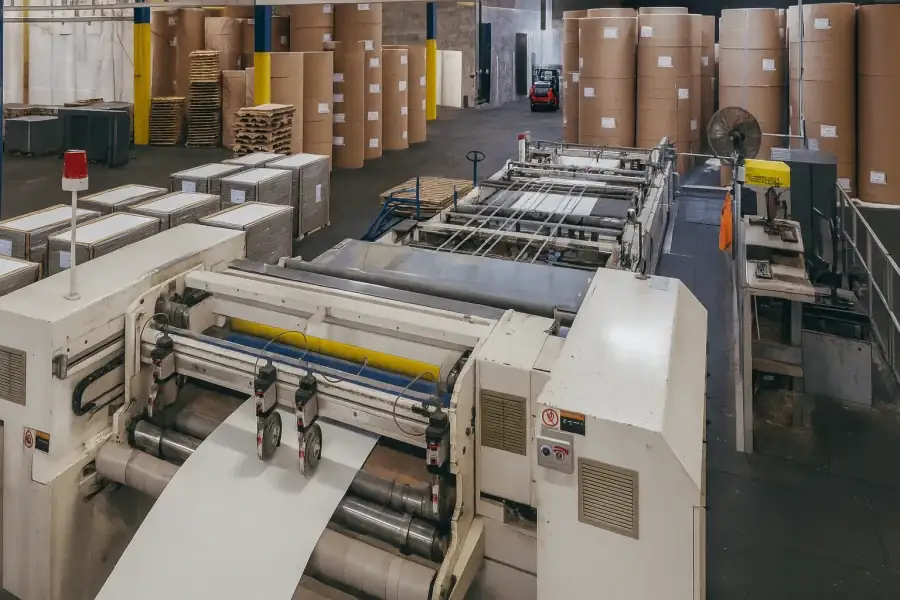
Compare paperboard converters and broader contract converters, including when buyers need sheeting, rewinding, warehousing, restoration, and logistics support.
A buyer searching for a paperboard converter usually has a specific substrate problem. They may need rolls sheeted for a folding carton plant, parent rolls converted into a usable format, or paperboard staged for press and finishing work. The search is material-specific and often tied to downstream production performance.
A buyer searching for a contract converter may have a broader material or capacity problem. The work could involve paperboard, but it could also involve paper, film, PVC, nonwovens, specialty materials, or restoration. The Bengal Group should rank for both concepts because its capabilities span paperboard-specific and broader converting needs.
A paperboard converter is the right fit when the main need involves board grades, sheet size, caliper range, stack condition, pallet quality, or print and folding carton performance. Buyers should focus on sheeter capability, tolerance control, handling standards, and whether finished material can move smoothly into inventory or shipment.
The Bengal Group's two Marquip sheeters and paperboard handling experience make this a natural cluster. The stronger SEO move is to connect those specs to buyer outcomes: fewer press interruptions, cleaner pallet presentation, faster replenishment, and more confidence that converted board is ready for downstream use.
A broader contract converter is better when the buyer needs multiple material families, roll-based work, short-run support, damaged-roll recovery, or integrated warehousing. A customer may start with paperboard but later need rewinding, slitting, restoration, or logistics for related material programs.
This is where The Bengal Group can stand apart from a narrow paperboard-only provider. The company can support paperboard sheeting while also offering rewinding, slitting, restoration-to-prime, warehousing, cross-docking, and inventory reporting. For buyers trying to reduce vendor complexity, that broader model matters.
The decision should start with the material and end with the operating model. If the only need is a single paperboard sheeting job, evaluate sheet size, tolerance, and schedule. If the job touches inventory, storage, roll stock, recovery, or customer release timing, evaluate the full converting and logistics system.
The Bengal Group should position itself as the practical answer when customers want paperboard conversion without losing the flexibility of a broader operating partner. The pitch is not either paperboard converter or contract converter. For many buyers, The Bengal Group can be both.
A narrow paperboard converter may be enough for a simple job with no storage, no timing pressure, and no downstream complexity. But many real programs do not stay simple. Demand changes, customers request phased releases, material arrives early or late, and finished inventory may need to be held before shipment. In those moments, a broader operating model becomes more valuable.
The Bengal Group can answer the paperboard converter search while also showing buyers a path beyond the initial conversion. The same partner can help with parent roll receipt, sheeting, rewinding, storage, cross-docking, restoration, and inventory reporting. That makes the relationship more useful for packaging teams that want fewer vendors and faster answers.
That broader value is also why the page should link directly to custom paperboard converting services. A buyer who begins with a comparison question may be ready to move into a quote conversation once the operational fit is clear.
Yes. The Bengal Group supports paperboard converting through Marquip sheeting, rewinding, packaging, inventorying, warehousing, and logistics workflows.
Usually yes. Contract converting can include paperboard plus paper, film, PVC, nonwovens, specialty materials, restoration, packaging, and logistics support.
Ask whether the provider can meet your material, output, tolerance, packaging, timing, inventory, and shipment requirements in one operating model.