Published May 5, 2026
Updated May 5, 2026 | 13 min read
Primary Keyword: paperboard packaging market outlook 2026

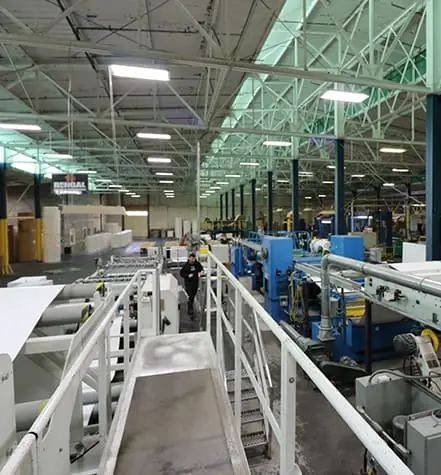
A 2026 paperboard packaging market outlook for procurement, operations, and converting teams planning around uneven demand, sustainability pressure, and capacity risk.
Packaging procurement, folding carton operations, and paperboard supply chain leaders increasingly treat paperboard packaging market outlook 2026 as a revenue protection decision, not only an operations task. Paperboard and folding carton demand is no longer a simple growth story; buyers face uneven order patterns, cost pressure, sustainability expectations, and customer delivery commitments that still leave little room for execution failure. When lead times stretch or quality variance rises, sales teams lose confidence in promised dates, procurement teams escalate expedite requests, and margin erodes quietly through rework, freight premiums, and avoidable handling.
Flexible contract converting and sheeting support lets teams protect service levels without overcommitting capital or creating stranded internal capacity. For organizations serving demanding customers, strong execution in this area builds trust that translates into repeat volume and longer-term account stability. Northeast and Mid-Atlantic customers benefit from partners that can turn paperboard quickly, stage inventory close to demand, and connect converting output directly to outbound shipping. In the Northeast, speed and predictability often decide who wins the order, especially when programs are schedule-sensitive or capacity-constrained.
Most teams do not fail because strategy is missing; they fail because day-to-day execution gets fragmented across disconnected vendors, manual handoffs, and reactive scheduling. Even technically strong facilities can lose performance when communication loops are slow and data is not synchronized between production, warehousing, and outbound logistics.
The Bengal Group sees recurring patterns across converting and logistics engagements. Identifying these pressure points early gives teams a practical way to reduce disruption before it impacts service levels or customer commitments.
High-performing programs standardize execution before volume ramps. That means defining substrate requirements, quality thresholds, packaging rules, and reporting cadence up front so production and logistics teams are aligned from day one.
The Bengal Group applies a staged framework that keeps accountability clear while preserving flexibility for changing demand. The goal is to create stable throughput without forcing your team into rigid workflows that cannot adapt when priorities shift.
A reliable strategy needs measurable outcomes. Teams should track metrics that connect directly to customer impact, operating efficiency, and financial performance. Monitoring only machine uptime or warehouse occupancy can miss the real signal if customer-facing reliability is declining.
Bengal encourages KPI reviews that combine converting quality, inventory flow, and shipment performance so management can see where constraints are developing before they become customer issues.
Implementation succeeds when intake is detailed and execution ownership is explicit. The Bengal Group’s model is built to move quickly from discovery to dependable production cadence while maintaining transparency on inventory status and outbound timing.
Programs can start with one lane and scale as confidence grows. Because The Bengal Group combines custom contract converting, warehousing, cross-docking, and distribution support, teams avoid many of the communication gaps that occur when those functions are split across separate providers.
Before selecting a converting and logistics partner, confirm the execution details that most affect your customer commitments. A strong onboarding checklist reduces avoidable surprises and shortens the path to stable results.
Uneven demand still creates spikes, urgent replenishment, and recovery needs. Outsourced converting gives teams flexible capacity without forcing fixed internal investment.
Start with machine fit, sheeting tolerance control, packaging standards, inventory visibility, and the partner ability to connect converting to outbound logistics.
Yes. Better setup discipline, lower trim waste, and restoration workflows can reduce avoidable material loss while maintaining customer-ready quality.