Published July 6, 2026
Updated July 6, 2026 | 8 min read
Primary Keyword: what is contract converting

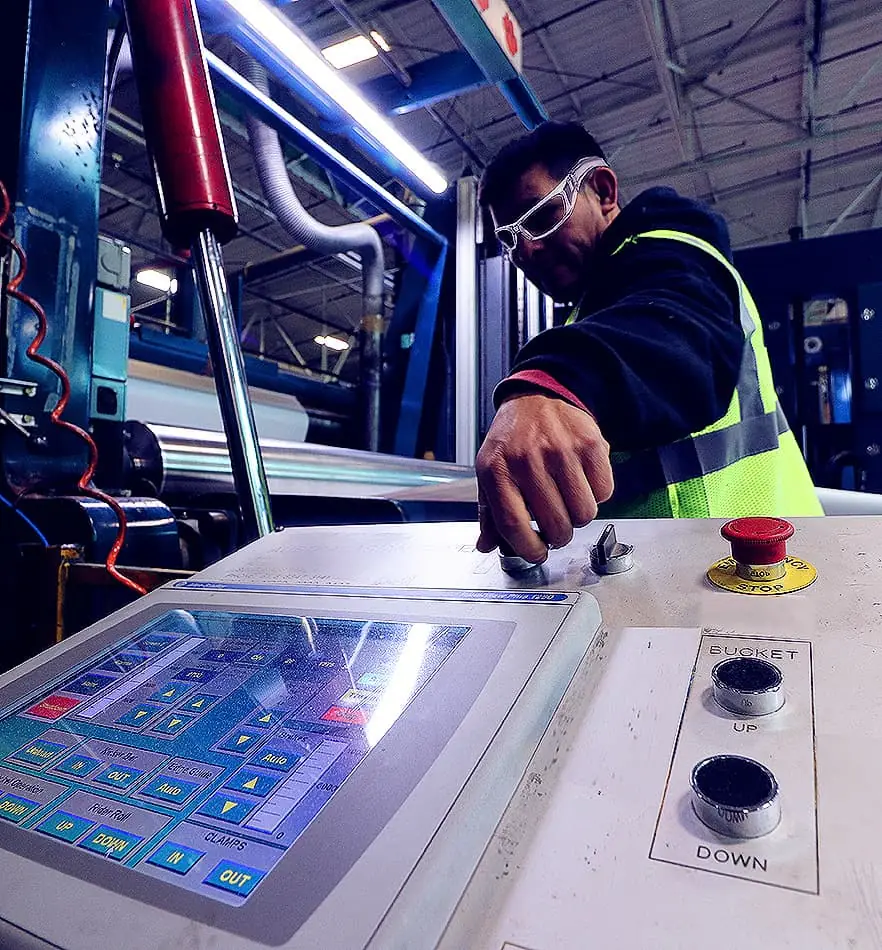
Learn what contract converting means, when to outsource, what specs to prepare, and how to choose a converting partner for paper, board, film, and specialty materials.
Contract converting is outsourced material conversion performed to a customer's specifications. A manufacturer, distributor, packaging company, or brand supplies the material need, and the converter uses specialized equipment and trained operators to slit, rewind, sheet, restore, package, label, warehouse, or prepare material for shipment.
The simplest way to think about it is this: contract converting turns material into the format the next operation needs. That may be a roll with a specific width and core, a stack of press-ready sheets, a repaired roll, or finished inventory that is packaged and ready to ship. The value is not only in the cut. It is in reliable execution.
Companies use contract converting when internal assets are constrained, demand is variable, a new product needs fast launch support, or a material profile does not fit the normal production setup. Outsourcing can also help buyers avoid new equipment spending when the demand case is not stable enough to justify fixed cost.
The best use cases are practical. A folding carton plant needs extra paperboard sheeting capacity. A distributor needs roll stock slit to customer widths. A manufacturer needs damaged rolls evaluated before writing them off. A supply chain team needs converted material stored and released in phases. Those are all contract converting scenarios.
A converter can respond faster when the buyer sends a complete operating profile. Useful details include substrate type, caliper or gauge, parent roll dimensions, target output size, core requirements, quantity, tolerance expectations, packaging method, labeling needs, storage requirements, and target ship date.
Business context also matters. Tell the provider whether the work is recurring, urgent, experimental, recovery-driven, or tied to a customer launch. That helps the converter think through risk, equipment fit, scheduling, and downstream logistics. The more specific the intake, the faster the path to a useful recommendation.
A strong contract converting partner should be evaluated on capability, quality discipline, communication, and the ability to support what happens after conversion. Equipment ranges matter, but so do intake processes, inspection habits, packaging standards, inventory visibility, and exception response.
The Bengal Group is strongest when customers need more than machine time. Its converting operation is connected to warehousing, cross-docking, SAP and EDI inventory support, rail access, and regional distribution. That combination helps buyers reduce handoffs and keep customer commitments visible from material receipt through shipment.
The Bengal Group is a fit when the buyer needs contract converting to connect with real supply-chain execution. If the material has to be received, converted, counted, stored, staged, or shipped, the provider needs more than a machine. The Bengal Group's converting, warehousing, rail access, dock capacity, and inventory visibility create a practical operating model for customers that want fewer handoffs.
The strongest next step is to treat the first inquiry like an operations intake. Instead of asking only for a quote, send the material profile, dimensions, quantity, deadline, packaging expectations, and whether the converted output should ship immediately or enter inventory. The Bengal Group can then respond with a plan that reflects the whole material journey.
No. Contract converting can support paper, paperboard, film, PVC, woven and nonwoven materials, and other specialty substrates depending on equipment and handling requirements.
Not always. Many buyers use contract converting to supplement internal capacity, handle specialty jobs, support surge demand, or reduce risk during urgent programs.
Start by sharing material specs, desired output, quantity, timing, packaging needs, and whether warehousing or outbound logistics are required.