Primary Keyword: 3PL for pulp and paper producers
Related Topics: 3PL pulp & paper producers, 3PL for pulp and paper producers, paper roll warehousing, paper warehousing services

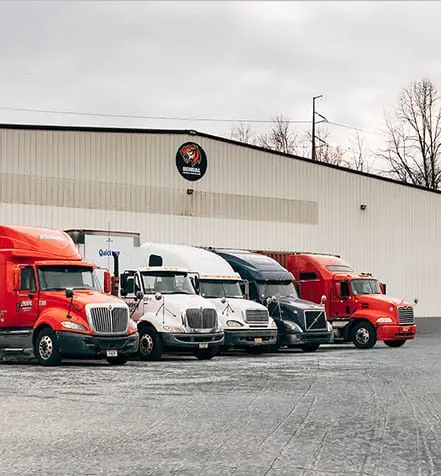
3PL support for pulp and paper producers needing paper roll warehousing, rail-to-truck handling, inventory visibility, cross-docking, and converting-adjacent logistics.
The Search Console data includes 3PL pulp and paper producers, paper roll warehousing, paper warehousing services, and PA warehousing capabilities. These are not high-volume consumer searches, but they are unusually valuable. A person searching for 3PL support for pulp and paper producers is likely close to a real sourcing problem: storage, rail transfer, roll handling, inventory control, customer release, or regional distribution.
A generic 3PL page is too broad for this buyer. Paper and pulp-related materials have weight, handling, roll condition, moisture, packaging, documentation, and space requirements that differ from ordinary consumer goods. The Bengal Group should have a dedicated page that speaks to those realities and positions the company as a specialist for paper-intensive supply chains in Pennsylvania and the Northeast.
Pulp and paper producers need a 3PL that understands heavy, high-value, damage-sensitive material. Rolls and paperboard cannot be treated like anonymous pallet freight. The provider has to protect edges, cores, wrap, moisture exposure, label accuracy, lot control, and safe movement through the facility. It also has to support the commercial reality of paper supply chains, where customers may release material in phases or change timing quickly.
A strong 3PL partner for paper producers combines warehouse discipline with transportation flexibility. It can receive by truck or rail, stage by customer or lot, report inventory accurately, prepare outbound loads, support cross-docking, and coordinate with converting operations when material needs to be slit, rewound, sheeted, restored, or repackaged. The Bengal Group's combined operating model is a direct fit for that need.
Paper roll warehousing requires attention to physical condition, identification, movement, and release accuracy. A roll can lose value through crushed cores, edge damage, moisture exposure, incorrect staging, or poor documentation. The warehouse team has to understand how to move and store rolls safely, how to identify exceptions, and how to communicate status before a small issue becomes a customer problem.
The same logic applies to converted sheets and paperboard inventory. Pallet condition, stack alignment, label accuracy, and release timing affect downstream production. The Bengal Group can use this page to show buyers that paper warehousing is an operational discipline. It is not simply a building with space available. It is a process for protecting inventory value while making material easier to plan, convert, and ship.
Rail access matters for paper and heavy industrial materials because it gives shippers another option for high-volume inbound movement. A rail-served warehouse can reduce transfer friction when material arrives in bulk and needs regional storage, conversion, or truck distribution. But rail access only creates value if the facility can coordinate timing, unload safely, stage inventory correctly, and prepare outbound shipments without losing visibility.
The Bengal Group's on-site rail switch and 16 loading docks should be central to the page. Together, those assets support rail-to-warehouse, warehouse-to-truck, and cross-dock workflows. For pulp and paper producers, this means The Bengal Group can act as a regional node between production, port, rail, conversion, and customer delivery. The SEO message should connect physical infrastructure to service outcomes: fewer handoffs, better flow, and more resilient distribution options.
Paper supply chains often operate with high-value inventory and tight production commitments. If a customer cannot trust inventory status, planners may overbuy, expedite, delay production, or spend hours reconciling spreadsheets. A 3PL for pulp and paper producers has to provide more than periodic counts. It needs a reliable status process that supports customer service, procurement, and production planning.
The Bengal Group's SAP and EDI integration story helps answer this need. Inventory visibility should include receipt status, available inventory, holds, converted material, staged loads, outbound shipments, and exceptions. The exact reporting model can vary by customer, but the principle is constant: paper buyers need to know what material exists, where it is, what condition it is in, and when it can move.
The strongest reason for Bengal to target this cluster is that its 3PL offering is not disconnected from converting. A paper producer may need roll storage today, rewinding tomorrow, restoration next week, and cross-docking at the end of the month. A converter may need overflow storage for parent rolls before running them through internal equipment. A packaging supplier may need paperboard sheeted, stored, and released by customer order.
This is where The Bengal Group can differentiate from generic warehouses. A typical 3PL can store and ship. The Bengal Group can store, convert, restore, stage, cross-dock, and report. For paper-intensive customers, that means fewer vendors and a better chance of solving problems without moving material to another facility. The page should repeatedly connect 3PL services to paper-specific converting workflows.
A paper 3PL program should be scoped around material profile, inbound mode, storage duration, release pattern, handling requirements, inventory visibility, and outbound destinations. The buyer should share roll dimensions, weight, packaging condition, lot requirements, customer references, expected monthly volume, dock or rail needs, and whether converting or restoration may be required. This level of detail lets Bengal evaluate space, equipment, labor, and reporting needs accurately.
The scope should also capture business risk. Is the customer dealing with overflow? Are they replacing an underperforming warehouse? Are they trying to support imported material, seasonal demand, or a new customer contract? Do they need cross-border support into Canada? These questions help Bengal propose a practical operating model rather than only a storage rate.
The commercial value of a paper-specialized 3PL comes from reducing preventable cost. Damage, duplicate handling, inventory confusion, delayed release, and emergency freight all erode margin. A provider that understands paper materials can prevent some problems and identify others early enough for recovery. That matters when each roll or pallet carries meaningful value and downstream production depends on material condition.
The Bengal Group can also help customers reduce operational complexity. Instead of separately coordinating a warehouse, converter, restoration provider, cross-dock facility, and transportation handoffs, the buyer can centralize more of the work. That does not remove the need for planning, but it shortens communication loops. For sales, procurement, and customer-service teams, faster answers often become the difference between confidence and fire drills.
Paper and paperboard inventory risk is not only about whether material is physically present. The buyer also needs confidence in condition, identity, release status, and downstream usability. A roll that is in the building but has a damaged core, missing label, or uncertain hold status can still disrupt production. That is why a paper-specialized 3PL needs clear risk controls from receiving through outbound movement.
The Bengal Group can make this page stronger by naming those controls. Receiving inspection, label verification, lot control, damage documentation, restoration review, safe movement, packaging checks, and customer-ready reporting all help protect inventory value. These topics are rarely covered on generic 3PL pages, which gives Bengal a chance to look more relevant to paper buyers and producers.
The goal is to prevent expensive surprises. If material arrives damaged, the customer should know quickly. If inventory is held, the hold reason should be visible. If material is converted or restored, status should change in a way planning teams can trust. Risk control is the bridge between warehouse activity and customer confidence.
For high-volume paper programs, those controls also help leadership understand whether the warehouse is protecting margin. Damage rates, aging inventory, manual status requests, and emergency releases are all signals. When the 3PL can show those signals clearly, the customer can improve packaging, carrier choices, release planning, and converting schedules before problems repeat.
That is the difference between storage as a commodity and 3PL as an operating advantage. The buyer gains a partner that can surface risk early enough to act.
This anchor page should speak directly to the companies most likely to become customers. Pulp and paper producers may need a Northeast node for roll storage, rail-to-truck transfer, or customer release. Paper mills may need overflow capacity or a partner close to regional customers. Packaging suppliers may need paperboard stored, sheeted, and shipped. Industrial distributors may need heavy material staged with accurate inventory status.
Converters are also a strong fit. A converter with limited warehouse space can use Bengal to store parent rolls, hold finished output, recover damaged material, or support cross-docking when customers need fast release. The message is that The Bengal Group can help paper-intensive businesses reduce operational drag without forcing them to split storage, conversion, and logistics across unrelated providers.
A pulp and paper producer should evaluate a 3PL by looking at material experience, facility layout, dock and rail access, inventory systems, damage prevention, restoration options, and communication. The buyer should ask what types of paper or board the provider has handled, how rolls are identified and moved, how damaged material is documented, and how status is reported to the customer's team.
The provider should also be able to discuss exceptions. What happens if inbound rail arrives late? What happens if a roll arrives with a crushed core? What happens if the customer wants a partial release sooner than planned? What happens if material needs to be converted before shipment? The Bengal Group should answer those questions on the page because they reflect the true buying process behind 3PL pulp and paper searches.
This page should invite pulp and paper producers, paper mills, converters, packaging suppliers, and distributors to send a specific operating profile. The form or call to action should ask for material type, roll count, dimensions, inbound mode, expected storage duration, release schedule, reporting needs, and whether converting or restoration is required. That turns a search visit into a qualified logistics discussion.
The internal link cluster should connect this page to paper roll warehousing, Northeast cross-docking warehouse services, contract converting services, custom paperboard converting, rail-served warehouse support, and real-time inventory visibility. Those links create topical authority while giving buyers a natural path through The Bengal Group's capabilities. The end goal is not more blog traffic for its own sake. It is more qualified conversations with paper and packaging supply chain teams.
A 3PL for pulp and paper producers can receive, store, track, stage, cross-dock, and ship paper rolls, paperboard, converted sheets, and related materials, often with rail, truck, inventory, and handling support.
Yes. The Bengal Group can support paper roll warehousing, inventory visibility, cross-docking, restoration-to-prime evaluation, converting-adjacent staging, and outbound logistics.
Paper warehousing requires careful roll and pallet handling, damage prevention, lot and label control, moisture awareness, status visibility, and experience with high-value material that may feed production.