Primary Keyword: custom paperboard converting services
Related Topics: custom paperboard converting services, paperboard converting, custom converted paperboard, paperboard converter

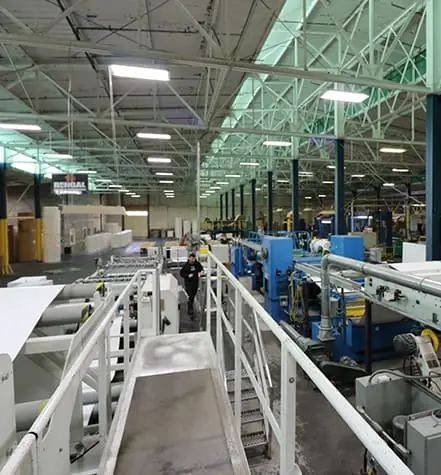
Custom paperboard converting services for buyers that need precise sheeting, rewinding, storage, inventory visibility, and Northeast logistics support.
The Search Console export shows a clear paperboard opportunity that is not yet converting into traffic. Queries such as paperboard converting, custom converted paperboard, custom paperboard converting services, paperboard converter, and paper converting services generated impressions but no clicks. The average position is mostly outside the first page, which means Google can see Bengal as relevant but does not yet have a single, deeply focused destination that answers the buyer's complete question.
This page is built to be that destination. It uses the exact language buyers are already typing, but it does not stop at keyword matching. A procurement manager, folding carton plant, print operation, or packaging supplier needs to know whether The Bengal Group can receive parent rolls, convert paperboard to exact specifications, hold inventory, protect pallet quality, and ship on a schedule. The content below answers those buying questions in one place.
Custom paperboard converting is the work that turns parent rolls or larger paperboard formats into production-ready output. Depending on the program, that may include precision sheeting, slitting, rewinding, core changes, packaging, labeling, palletization, inspection, storage, and outbound release. The buyer is rarely searching only for machine capacity. They are looking for a partner who can translate specifications into dependable material flow without creating downstream disruption.
For folding carton and print environments, small converting issues become expensive quickly. A sheet that is dimensionally inconsistent can affect feeding, registration, stack handling, press uptime, finishing, and delivery performance. A roll that is wound poorly or labeled inconsistently can slow the next production step. Strong custom paperboard converting is therefore a service-level decision, not simply a cutting or winding task.
Most paperboard converting problems start before the machine is running. Specifications may be incomplete, tolerance expectations may be implied rather than written, or packaging requirements may be treated as an afterthought. The converter may be technically capable, but if the intake process does not capture the true downstream need, the program can still produce material that creates extra handling, rework, or customer-service pressure.
The second failure point is the handoff after conversion. Finished paperboard needs a clear path into storage, staging, cross-docking, or shipment. If converting and warehousing are split across separate vendors, the customer may lose visibility at exactly the point where they need confidence. The Bengal Group's value is strongest when the buyer needs both conversion accuracy and physical flow control after the material is finished.
The Bengal Group gives paperboard buyers a practical combination of equipment, floor space, operating hours, and logistics access. The site already communicates several proof points that matter for searchers in this cluster: two Marquip paperboard sheeters, five rewinders, rewinding widths up to 143 inches, sheeting output up to 65 by 80 inches, 225,000 square feet of converting and warehousing space, 16 loading docks, rail access, and 24/7/365 support.
Those details matter because a paperboard buyer is often balancing urgency against risk. They may need a short-run conversion, a recurring sheeting lane, a recovery option for constrained internal assets, or a regional partner that can store converted material and release it on demand. The Bengal Group can position custom paperboard converting as part of a full operating model rather than a single isolated service.
A successful paperboard converting job starts with a complete intake package. The buyer should define the parent material, board grade, caliper, roll width, desired output size, tolerance expectations, grain direction if relevant, sheet count, core requirements, winding profile, packaging method, labeling standard, release schedule, and any downstream equipment constraints. A strong converter will ask these questions early because they directly affect quality and schedule.
The goal is to eliminate assumptions. If the finished sheets are feeding a press, stack condition and dimensional control matter. If the output is moving into warehouse storage, packaging and labeling have to support inventory accuracy. If material is moving into cross-dock flow, release timing must match carrier appointments. The Bengal Group can use these details to build a repeatable job profile rather than treating each order as a one-off transaction.
Paperboard converting for folding carton and print customers needs a different quality mindset than general material handling. The output has to be usable in a production environment where small variation can compound across press time, finishing time, waste, and customer delivery windows. Quality control should include setup verification, in-process checks, finished count accuracy, stack inspection, edge condition, and packaging review before release.
The buyer should also ask how feedback loops are handled. If a press team reports feeding issues, the converter should be able to connect that feedback to job setup, board behavior, pallet condition, or handling practices. This is where recurring programs improve over time. The Bengal Group can use repeatable job records and inventory visibility to help customers learn which specifications produce the most stable downstream performance.
Many buyers compare custom paperboard converting vendors on price per unit or price per ton, but the real cost often appears after conversion. If finished material sits in the wrong place, requires extra transfer, lacks status visibility, or needs repackaging before shipment, the lowest converting quote can become expensive. Integrated warehousing helps reduce those hidden costs because the same operating partner controls the material after conversion.
For Bengal, this is an important differentiator. The company can convert material, store it, track it, stage it, cross-dock it, and prepare it for outbound movement under one operating model. That matters for customers with variable demand, imported paperboard, seasonal programs, growth-stage packaging launches, or customer-specific release schedules. The practical benefit is fewer handoffs and faster answers when a customer asks what is ready to ship.
The decision to outsource paperboard converting is not always a sign that internal operations are weak. In many cases, outsourcing is the disciplined choice. Internal equipment may be reserved for core lanes, operators may be stretched across higher-value work, or demand may be too variable to justify another fixed asset. A contract converter gives the buyer flexibility without waiting for equipment approval, installation, hiring, and training.
Searchers using terms like custom converted paperboard or paperboard converter are often trying to solve an immediate capacity or capability gap. The Bengal Group should speak directly to that moment. The buyer needs a path from problem to feasibility review to production plan. A strong page should make it easy to understand which specs Bengal needs, which capabilities are available, and what type of programs are a good fit.
A paperboard converter should be evaluated on more than whether it owns a sheeter or rewinder. The buyer should ask how the provider captures job specs, validates setup, handles repeat orders, protects finished material, manages inventory status, supports urgent schedule changes, and communicates exceptions. These factors predict whether the relationship will reduce stress or simply move stress to another vendor.
The right partner also has to fit the customer's geography. For Northeast and Mid-Atlantic buyers, proximity to ports, highways, regional manufacturers, and customer locations can reduce dwell time and improve responsiveness. The Bengal Group's Royersford, Pennsylvania location gives the company a practical story for paperboard customers that need access to Philadelphia, Newark, Baltimore, and dense regional freight lanes.
A paperboard buyer may arrive with several different operating situations. One customer might have parent rolls already purchased but no internal sheeter time available before a customer deadline. Another might need custom converted paperboard staged near Northeast customers for phased release. A third may need overflow support when a folding carton plant wins new volume but does not want to disrupt its highest-margin internal lanes.
The page should make those scenarios visible because they reflect the searches already appearing in the data. Paperboard converting is not one service moment. It can mean press-ready sheeting, custom roll output, emergency conversion, inventory staging, damaged-material recovery, or a combined program where Bengal receives, converts, stores, and ships material according to customer release instructions.
The strongest lead language is therefore operational. Ask the visitor whether they need recurring conversion, a one-time urgent job, a new product launch, a storage-and-release program, or help with damaged or stranded material. That gives Bengal a better path to match the inquiry to the right workflow and gives Google more evidence that the page satisfies real commercial search intent.
A paperboard converting program should not be judged only by whether the job was completed. The buyer should track whether converted output was usable, whether downstream equipment ran as expected, whether inventory status was accurate, and whether shipments left on schedule. These metrics connect converting performance to customer outcomes, which is what procurement and operations leaders actually care about.
For recurring programs, The Bengal Group can use the same metric discipline to improve performance over time. Repeat jobs should become easier to schedule, easier to inspect, and easier to release because the operating standard becomes clearer. That ongoing improvement story is valuable SEO content because it moves the page beyond a static service description and into buyer education.
The paperboard cluster needs clear calls to action that match buying behavior. A visitor arriving from paperboard converting or custom paperboard converting services is likely evaluating capability fit. The page should invite them to send grade, caliper, parent roll width, target sheet size, quantity, packaging needs, storage needs, and timing. A quote request should feel like an operations intake, not a generic contact form.
Internal linking should also push the visitor deeper into proof. The machine matrix supports technical validation. The custom contract converting page supports broad capability. The warehousing page supports flow control. The blog posts answer secondary questions such as what contract converting means, when short-run converting makes sense, and how to evaluate a paperboard converter. Together, those pages create a topical cluster that can grow from a few impressions into qualified quote requests.
Custom paperboard converting services turn parent rolls or larger paperboard formats into customer-specific rolls, sheets, pallets, or staged inventory using sheeting, slitting, rewinding, packaging, labeling, and logistics workflows.
Folding carton plants, print operations, packaging suppliers, distributors, consumer-goods teams, and industrial material buyers use custom paperboard converting when they need exact dimensions, flexible capacity, or regional inventory support.
Send the board grade, caliper, parent roll size, desired output size, tolerance requirements, quantity, packaging method, storage needs, release schedule, and any downstream equipment constraints.